Toy Car: Traffic Jam
- 4.9
- Rating
- 500.00K
- Installs
- Free
- Price

 Analysis by App-foxy
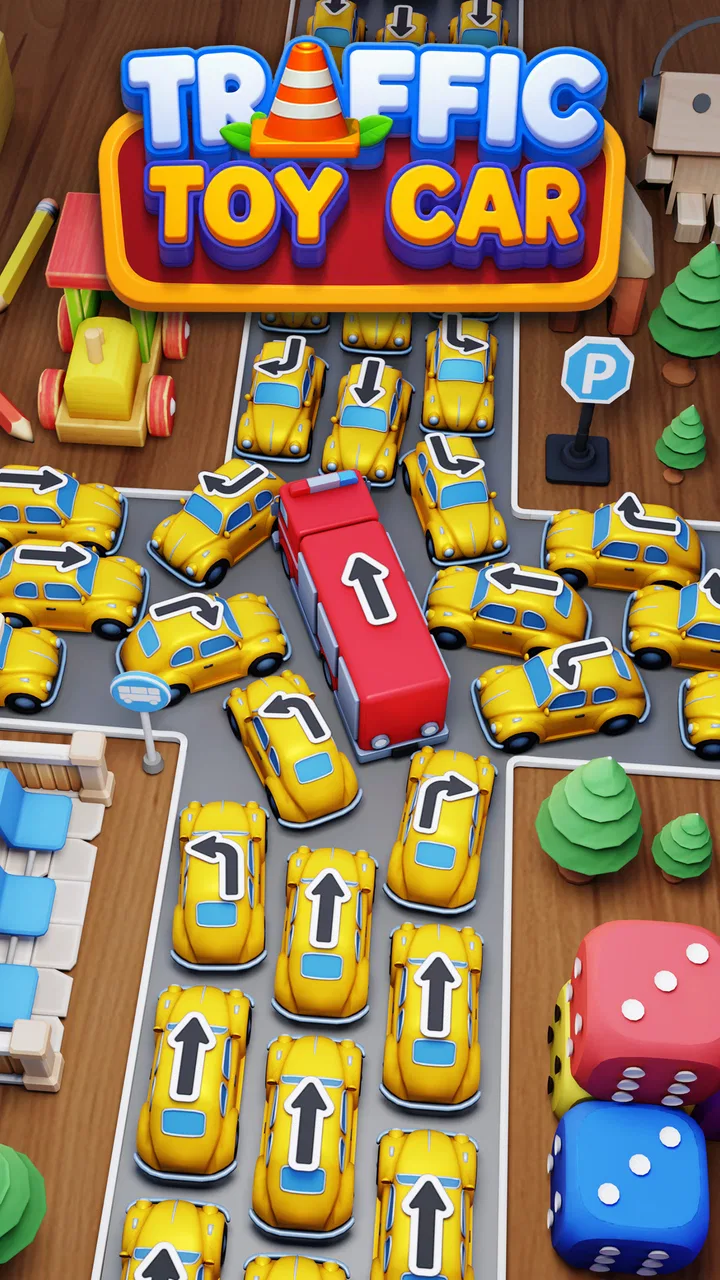
I usually judge a puzzle game by what happens after the first few minutes. Does it still feel pleasant when I am tired, does it work for a quick break, and can someone else pick it up without a long explanation? Toy Car: Traffic Jam makes a good first impression in that setting. It is a free puzzle game from MFT ENTERTAINMENT LIMITED built around clearing crowded toy-car situations, with a gentle presentation that suits short, low-pressure sessions.
The idea is easy to understand: cars are packed into a jam, and I need to work out how to release them in the right way. That familiar setup gives the game an immediate advantage on a shared phone or tablet. A child can understand the visual goal, while an adult can still enjoy the planning involved. It is not a game I would choose for a dramatic story or deep character system. I would choose it when I want a focused little challenge that does not demand a large time commitment.
How it fits into everyday shared use
The most natural household scenario is a spare device on a kitchen table or living-room sofa. One person plays for a few minutes, hands the device over, and the next person tries the same kind of traffic puzzle. Because the central action is visible, another player can usually understand what is happening simply by watching. That makes it more suitable for casual turn-taking than a game that depends on private progress, long dialogue, or complicated controls.
You May Also Like

 Blood Strike: 2.5 Anniversary
Blood Strike’s Loadouts Turn Every Drop Into a Tactical Gamble
A close look at Blood Strike’s custom loadouts: how fast access to signature weapons reshapes its battle royale rhythm, rewards preparation, and narrows the gap between fights.

 Pandora - Music & Podcasts
Pandora’s Music Is Easy to Start, but Harder to Recover
Pandora’s strength is its low-effort path from a seed to a station. Its weak spot is how much confidence it asks you to place in connection, setup, and quiet recovery.

 8 Ball Pool
 Is Built on Rivalries, Rematches, and Routine
A close look at the rivalries, rematches, shared routines, and unanswered safety questions that turn a quick pool match into a persistent mobile community.

 Samsung Music
’s Quiet Strength Is Playing What You Already Own
Its reach comes less from spectacle than from dependable access to a personal library. That simplicity is both the app’s strongest retention engine and its ceiling.

 AccuWeather: Weather Radar
AccuWeather Review: A Quick, Clear Forecast for Everyday Decisions
For everyday plans, the best forecast is the one you can understand quickly. AccuWeather makes rain timing, radar, and local conditions easy to act on, with a few trade-offs.

 Hill Climb Racing
Why Hill Climb Racing Still Turns Crashes Into One More Run
A tiny car, a bumpy hill and one more upgrade: Hill Climb Racing keeps resurfacing because its simple chaos makes every near-miss feel personal.
More From Our News Desk
View All News


I also found the toy-car theme useful for shared play because it keeps the screen readable. The board communicates the problem through objects and movement rather than a large amount of text. If I were showing it to a younger player, I could explain the basic aim without turning the session into a tutorial lesson. The challenge then becomes a conversation: which car should move first, which route should remain open, and whether a seemingly helpful move will block another vehicle later.
That does not make it a true multiplayer game. The enjoyment comes from taking turns, discussing choices, or watching someone solve a board, not from two people controlling the puzzle simultaneously. If your household specifically wants cooperative play with separate turns recorded for each person, this is not the right expectation. Its strength is informal sharing, not a built-in family competition structure.
A practical advantage is that the game can fill small gaps in the day. I would use it while waiting for an appointment, during a short commute break, or when I want something more engaging than scrolling but less demanding than a long strategy game. The compact puzzle format also makes it easier to stop after a single challenge. That matters on a shared device, where one person may need to give it back quickly.
What the puzzle asks you to notice
The key skill is not simply moving cars quickly. It is reading the whole arrangement before making a move. A car that appears ready to leave may be dependent on another vehicle moving first, while an apparently harmless move can remove the space needed for a later escape. I get more from the game when I pause to scan the board instead of tapping at the first available option.
My most useful habit is to identify the vehicles that are already close to an exit and protect their routes. I then look for the car or cars creating the main obstruction. This approach reduces random movement and gives the puzzle a satisfying sense of cause and effect. It is a small insight, but it changes the experience from “try everything” to “build a plan.”
On a shared screen, that planning habit is especially helpful. A younger player may want to move the most visible car immediately, while an older player can ask what space that move creates or removes. The game becomes a simple exercise in explaining consequences without making the interaction feel like homework.
Setting boundaries before handing over the device
The game is free to start, which makes it easy to place on a household device without committing to a purchase first. It does include in-app purchases ranging from $0.99 to $99.99 per item, so I would not hand it to a child on a payment-enabled device without first checking the device’s purchase protections. That is not a criticism of the puzzle itself, but it is an important boundary for shared use.
I would also agree on whose turn it is before opening the game. A simple rule such as one puzzle per turn works better than letting the most persistent player keep the device. Since the game is designed around individual decision-making, a clear handover point prevents arguments and keeps the experience relaxed.
Another useful boundary is whether people may offer hints. If everyone gives instructions immediately, the player holding the device may stop solving the board independently. In my experience, a better household rule is to allow one broad hint, such as pointing out a blocked route, rather than dictating every move. That preserves the puzzle’s value while still making it welcoming to beginners.
The game is marked for Everyone, and its visual premise is approachable, but an age label does not tell me how each individual child will respond to difficulty or repeated failure. I would watch the first session rather than assume the rating settles every question. Some children enjoy trying several possibilities; others become frustrated when a board does not open quickly. The right response is to keep the session short and treat mistakes as part of the puzzle rather than as a performance test.
Coordinating turns without built-in family tools
For a family or group sharing one device, the simplest coordination method is to use the game’s natural stopping points. Finish a puzzle, pass the device, and let the next person begin from there. I would avoid interrupting someone halfway through a careful arrangement, because the player may lose the mental picture of which cars are blocking one another.
If several people are watching, it helps to separate suggestions from commands. I like asking, “What happens if that car moves?” instead of saying, “Move this one now.” That keeps the person playing in control and makes the game feel collaborative even though the controls belong to one player at a time.
There is also a useful difference between a first attempt and a rescue attempt. On the first attempt, I would let the player experiment. If the board becomes confusing, the group can discuss the obstruction and restart the reasoning from the most constrained vehicle. This is more satisfying than having someone else take the device and solve everything.
For adults sharing with children, the game can quietly reveal different problem-solving styles. One player may plan several moves ahead, while another may learn by testing the board. Neither approach needs to be treated as the correct one. The best shared sessions are the ones where the adults resist taking over and let the younger player discover why a move works or fails.
Age, trust, and the limits of a universal rating
The Everyone rating fits the toy-focused presentation and straightforward puzzle premise. I would consider it a reasonable option for a household looking for a non-violent, easy-to-explain game. Still, “Everyone” should be read as a broad content classification, not a promise that every puzzle will suit every child’s patience level.
For a child using an adult’s phone, trust also involves the commercial side of the app. The free entry point is convenient, but the presence of optional purchases means I would establish expectations before the first session. On a family tablet, I would make sure the person playing knows that tapping a purchase option is not part of solving the puzzle. That conversation is more useful than assuming the child will understand the difference automatically.
I would be comfortable recommending it for supervised shared play, casual independent use by children who already handle puzzle frustration well, and adults who enjoy light logic games. I would be more cautious with a very young child who tends to tap through every screen or with a device used by several people without any purchase boundary. The game itself may be simple, but shared-device habits still matter.
The developer is MFT ENTERTAINMENT LIMITED, and the game has reached over 500 thousand installs with a 4.9 average from around 14 thousand ratings. Those figures suggest that the central concept is connecting with a substantial audience, but they do not replace personal testing. A highly rated puzzle can still be a poor match for someone who dislikes repetition, visual congestion, or solving at a measured pace.
Version, access, and what to expect from the package
The current version is 1.0.18, and the game runs on Android 8.0 or later. That makes the operating-system requirement fairly approachable for people using an older compatible Android device, although I would still check the device before planning a shared installation. On a household phone, compatibility is especially important because the person who wants to play may not be the person who owns the newest hardware.
Because the price is free, trying it requires less commitment than buying a premium puzzle game. That is useful when I am choosing something for several people with different tastes. One person can enjoy the traffic logic, while another can decide after a short session that the format is not for them. The trade-off is the optional purchase range, so the free starting point should not be confused with an entirely purchase-free package.
I would not compare it directly with a large physics puzzle, a word game, or a story-driven adventure. Those alternatives offer different kinds of engagement. A physics game may provide more experimentation, a word game may be better for language practice, and a narrative puzzle may offer stronger long-term motivation. Toy Car: Traffic Jam is more focused: it turns spatial congestion into a compact problem and asks me to improve my reading of the board.
Compared with traditional traffic-jam puzzles played with physical pieces, the digital format is more convenient because the board is always ready and the toy-car theme makes the presentation approachable. The physical alternative may be better for a screen-free family session or for children who learn best by moving objects with their hands. I prefer this app when convenience and quick access matter more than tactile play.
Three habits that make the game more enjoyable
First, I recommend looking for the bottleneck rather than the most obvious car. The bottleneck is the vehicle or narrow route that affects several other moves. Finding it early gives the board structure and prevents a long sequence of unhelpful taps. This is particularly valuable when someone else is offering advice, because the group can discuss one meaningful obstruction instead of debating every car at once.
Second, I would leave an escape lane open whenever possible. A move can be legal and still be strategically poor if it fills the only useful space near the exit. Before moving a car, I mentally check whether it is creating room or merely relocating the blockage. That small pause makes the game feel more thoughtful and reduces the temptation to restart after every mistake.
Third, use shared play to compare plans, not just results. If two people choose different opening moves, let both explain what they noticed. The person who solves the board first has not necessarily found the most interesting route. Discussing why a move worked gives the game more replay value in a household than silently passing the device after completion.
These habits also show the game’s main limitation. Its satisfaction depends on enjoying visual planning and incremental progress. If I want constant novelty, fast reactions, or a strong sense of reward after every tap, the deliberate pace may feel too restrained. The toy theme softens the presentation, but it does not turn a logic puzzle into an action game.
Who should choose it, and who should skip it
I would recommend this puzzle to someone who likes tidy, self-contained challenges and wants a game that can be explained in one sentence. It is a good candidate for a shared Android device, a short evening session, or a child-and-adult conversation about planning. The free price also makes it practical to test before deciding whether it deserves a regular place on the device.
I would skip it if my priority were a deep campaign, rich customization, direct multiplayer, or a screen-free family activity. I would also look elsewhere if optional purchases are a deal-breaker for the household, even though the game can be started without paying. A premium puzzle with a single upfront cost may be a better fit for someone who wants a simpler purchasing environment.
For adults, the appeal is less about the toy-car theme itself and more about the clean mental task underneath it. For children, the appeal may begin with the cars and gradually become an exercise in sequencing. That difference is useful: the same game can serve as a light distraction for one person and a gentle introduction to planning for another, provided expectations stay realistic.
My household verdict
After looking at it as a shared-device game rather than only as a solo puzzle, I think Toy Car: Traffic Jam earns its place as an accessible option. It is easy to demonstrate, comfortable in short sessions, and naturally suited to taking turns. The strongest experience comes when players discuss the blockage and let the person holding the device remain the solver.
Its boundaries are just as clear. It is not a substitute for cooperative multiplayer, it may not satisfy players who need constant action, and the in-app purchase range deserves attention on a family device. Those are manageable concerns when the game is introduced with sensible rules about turns, hints, and spending.
Overall, I see it as a friendly puzzle for households that want something simple to share without requiring everyone to learn a complicated system. The combination of free access, an Everyone rating, and a familiar traffic problem makes it easy to try. My recommendation is to treat it as a short, conversation-friendly logic game rather than an all-purpose family entertainment app. If that is what you want, this toy-car jam is a pleasant choice; if you need deeper progression or genuine simultaneous play, another category will serve you better.
FAQs for Toy Car: Traffic Jam
01What is Toy Car: Traffic Jam, and how does the gameplay work?
Toy Car: Traffic Jam is a casual puzzle game centered on clearing crowded roads filled with colorful toy vehicles. Your objective is to move cars in the correct order, avoid blocking other vehicles, and create a path toward the exit. The early stages are simple, but later levels require careful planning, timing, and attention to the movement patterns of each car.
02Is Toy Car: Traffic Jam suitable for children and casual players?
The game is designed to be easy to understand, making it accessible to children, families, and players who prefer relaxed puzzle experiences. Its toy-inspired presentation and straightforward controls are inviting, while the increasing difficulty provides a challenge for older players as well. Parents should still review the app’s advertising, privacy, and in-app purchase settings before allowing younger children to play.
03Does Toy Car: Traffic Jam require an internet connection?
Toy Car: Traffic Jam may allow some basic gameplay without a constant internet connection, which is useful when traveling or playing in areas with weak reception. However, features such as advertisements, rewards, cloud-related services, updates, or other online elements may require connectivity. Because offline availability can change between versions, it is best to test the installed version before relying on it without internet access.
04Are there advertisements or in-app purchases in Toy Car: Traffic Jam?
As with many free-to-download mobile puzzle games, Toy Car: Traffic Jam may include advertisements and optional purchases. Ads can appear between levels or when you choose to receive extra rewards, while purchases may be offered for removing ads, obtaining hints, or unlocking useful items. Check the store listing and your device’s purchase controls for the latest pricing and payment information.
05What should I know about difficulty, hints, and progress in the game?
Toy Car: Traffic Jam generally begins with short, manageable puzzles and gradually introduces more complicated traffic arrangements. If you make an incorrect move, you may need to restart a stage or use an available hint, depending on the version. Progress and assistance systems can vary, so players should avoid spending rewards too quickly and consider whether the game supports account-based or cloud saving.
Pros
- Simple controls make it easy for younger players to pick up.
- Short levels are convenient for quick gaming sessions.
- Bright toy-themed visuals are appealing and easy to follow.
- Puzzle challenges gradually encourage better planning and timing.
- Playable offline
- so it does not require a constant internet connection.
Cons
- Some levels may feel repetitive after extended play.
- Difficulty can vary noticeably between consecutive stages.
- Ads may interrupt gameplay for users on the free version.
- Limited vehicle variety can reduce long-term excitement.
- Small screens may make precise taps harder during crowded puzzles.

Toy Car: Traffic Jam
Gallery